








 HOME
HOME
NEWS


CCADD attended and delivered oral presentations at 2025 KOSMI Fall Conference

CCADD
members attended the 2025 Fall Conference of the Korean Society of Medical Informatics(KOSMI), held from November 23 to 24 at Songdo Convensia in
Incheon. With the theme “Generative AI in Healthcare Systems: From Insight to
Impact,” the conference showcased the latest developments, real-world
applications, and future opportunities for generative AI in healthcare. Major
sessions explored LLM evaluation, LLM-based clinical ation and
validation, and AI-driven prediction of neurological disorders.
The
conference featured keynote lectures from leading experts in Korea and Taiwan. Professor
Sang-Hoon Jeon from Seoul National University Bundang Hospital discussed
initiatives aimed at reducing global healthcare disparities, including the
establishment of a Global Smart Hospital Network and the development of
cloud-based platforms for clinician education and severe disease consultation.
He emphasized that the key challenge is not merely how AI can reduce healthcare
disparities, but how quickly high-quality medical services can reach those who
are waiting for them. Professor Ming-Chin Lin from the College of Medicine at
Taipei Medical University addressed the shared challenges facing both Korea and
Taiwan—rapid population aging, declining birth rates, and increasing strain on
healthcare professionals. He introduced Ambient Intelligence as the next
evolution beyond ambient recording and traditional AI systems: a context-aware,
ethically governed, sensor-integrated healthcare environment designed to
support clinicians and empower patients.
More
importantly, CCADD delivered five oral presentations.
David presented his work on “improving the performance of drug interaction prediction using conformal prediction”, which delved into a new method of selecting input for LLM-based prediction module using the statistical framework.
Yujin
presented her work on “Constructing a Domain-Specific Korean–English Parallel
Corpus and Dictionary for Medical Translation Using a Large Language Model,”
which aims to improve the reliability and consistency of LLM-based medical
translation. By introducing a large-scale corpus construction framework, she
provided foundational resources that can support future research in the field.
During the session, she exchanged insights with reviewers and fellow
researchers and explored ways to further expand and deepen the study.
Suhyun An
presented her research on “Investigating LLM-based Reasoning and Training
Strategies for automating causality assessment of adverse drug reactions”. Her
study systematically explored optimal reasoning strategies and training methods
to enable large language models to emulate the clinical decision-making process
of medical experts.
Seoyoon Jang presented her work on "LLM-Based Extraction of Adverse Events
from Real-World Clinical Notes", which leveraged open-source LLMs to build
a privacy-preserving and robust framework capable of extracting adverse events
from real-world clinical notes.
Seeun Park presented her work titled “Improving Synthetic Clinical Note Generation via Expert Prompting Reflecting Linguistic and Structural Characteristics”. Her research proposed a new synthetic data-augmentation framework that captures the characteristics of real-world clinical notes, demonstrating its potential to support large-scale, high-quality synthetic datasets for AI training.
Through this conference, CCADD members reaffirmed that their research aligns with the current interest in the generative AI, which will play a pivotal role in advancing the healthcare industry. The event strengthened our commitment to pursuing impactful research and contributing to the development of next-generation AI-driven healthcare systems.
Keywords

CCADD
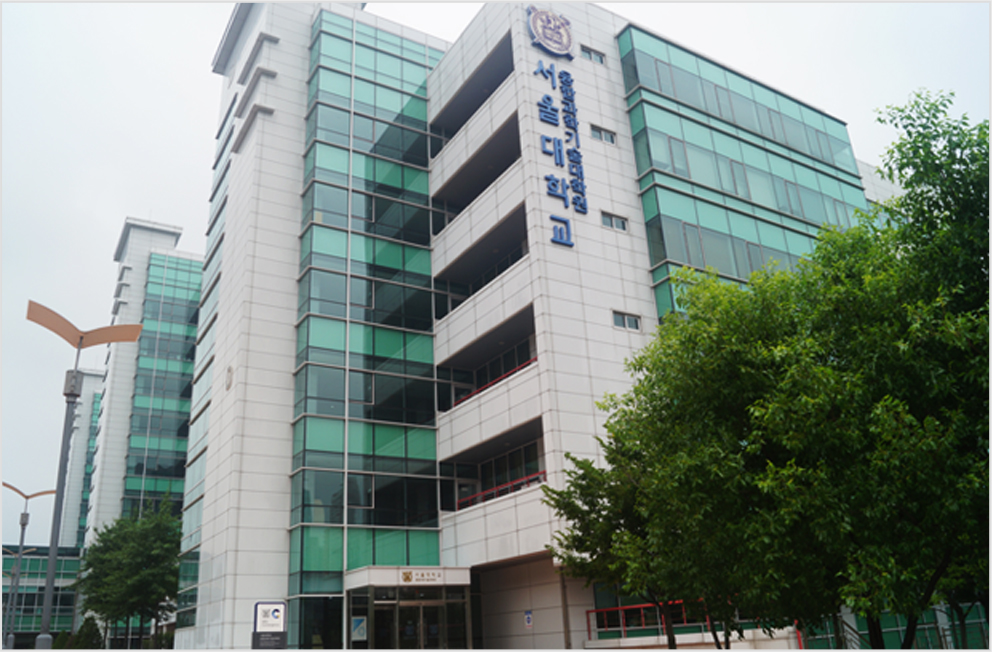
Center for Convergence Approaches in Drug Development, Graduate School of Convergence Science and Technology, Seoul National University
Room C-208, 145 Gwanggyo-ro, Yeongtong-gu, Suwon-si, Gyeonggi-do, 16229, SOUTH KOREA (Gwanggyo)
Room 406, Building 17, Seoul National University College of Medicine, 103 Daehak-ro, Jongno-gu, Seoul, SOUTH KOREA (Yeon-gun)
Tel: +82-31-888-9189 (Gwanggyo); +82-2-3668-7381 (Yeon-gun)
Fax: +82-31-888-9575
Email: ccadd.snu@gmail.com