









 HOME
HOME
RESEARCH


- Microtracing/microdosing Study
- Use of Artificial Intelligence for Clinical Drug Development
- Policy Analysis for an Integrated Clinical Research System in Korea
- Systems Pharmacology and Pharmacometrics
- Writing an Introductory Book on Biologics
- Top-down approach
- Describes the time course of individual patient exposure and response to a new treatment
- PK is the study of how the body processes a drug and PD is the study of how the drug acts on the body
- Population PK/PD models are used to determine how patient factors such as demographics, disease status and progression, and co-medication, might affect patient exposure to drug and their subsequent response
- Bottom-up approach
- Simulation of parent drug and metabolite concentration-time profiles and prediction of volume of distribution based on the lipophilicity, ionization, protein binding and tissue composition data
- Prediction of the extent of metabolism-based drug-drug interactions
- Simulation for virtual patient populations including North European Caucasians, Japanese, healthy volunteers (for virtual Phase I studies) as well as obese/morbidly obese individuals and patients with renal impairment (moderate or severe) and liver cirrhosis (Child-Pugh A, B or C)
- A full PBPK model, developmental physiology and the ontogeny of drug elimination pathways allows prediction of PK behavior in neonates, infants and children
Systems Pharmacology and Pharmacometrics
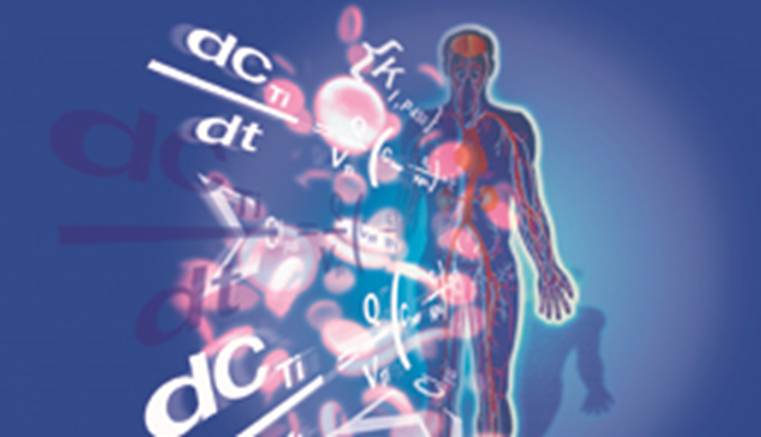
Systems pharmacology is an innovative approach to predict in vivo drug effects, in which biological networks rather than a single transduction pathway are viewed as the basis of drug action and disease progression. Likewise, pharmacometrics is the science of developing and applying mathematical and statistical methods to describe, characterize, understand, and predict a drug’s pharmacokinetic (PK) and pharmacodynamic (PD) behavior. When combined complementarily, systems pharmacology and pharmacometrics can be an indispensable tool to improve decision making processes in every phase and stage of drug development.
Pharmacokinetic/Pharmacodynamic (PK/PD) modeling using NONMEM program
Physiologically Based Pharmacokinetic (PBPK) and PK/PD modeling using SimCYP program

CCADD
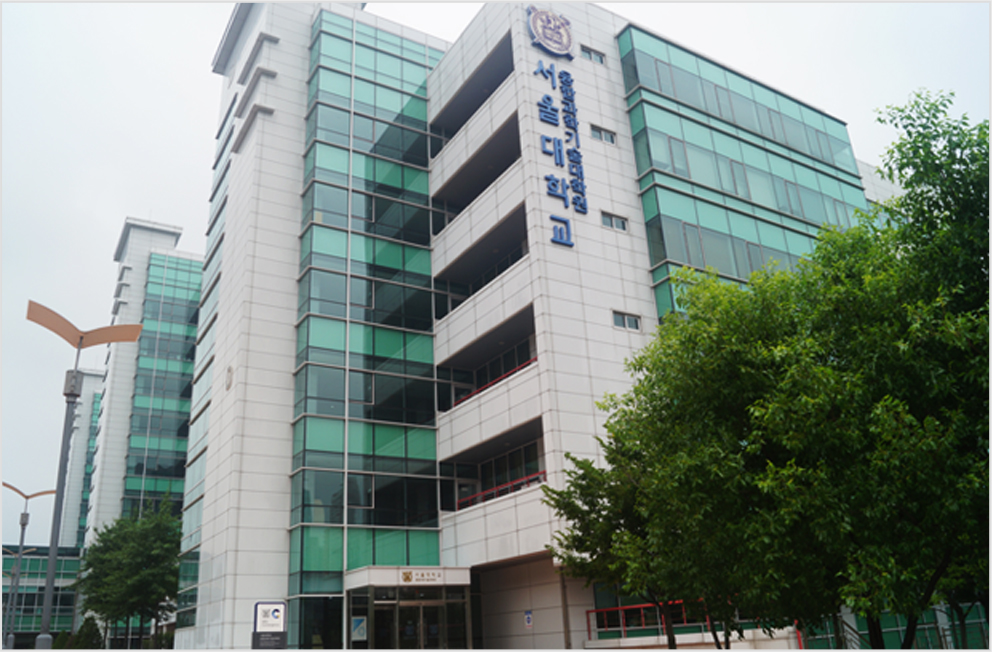
Center for Convergence Approaches in Drug Development, Graduate School of Convergence Science and Technology, Seoul National University
Room C-208, 145 Gwanggyo-ro, Yeongtong-gu, Suwon-si, Gyeonggi-do, 16229, SOUTH KOREA (Gwanggyo)
Room 406, Building 17, Seoul National University College of Medicine, 103 Daehak-ro, Jongno-gu, Seoul, SOUTH KOREA (Yeon-gun)
Tel: +82-31-888-9189 (Gwanggyo); +82-2-3668-7381 (Yeon-gun)
Fax: +82-31-888-9575
Email: ccadd.snu@gmail.com